In this article
- Your visitor log tells only part of the story
- Ask questions that make the score useful
- One visit can reveal more than one issue
- A low score should lead to a conversation, not just a report
- Google reviews are important, but they are not the whole picture
- Positive feedback deserves just as much attention
- Make feedback part of the way you run the building
- Know who visited. Understand what they experienced.
Imagine a daughter leaving your facility after visiting her father. A nurse greeted her warmly, and she appreciated seeing him comfortable in his room. But she also noticed something that concerned her. The bathroom needed attention, and she left without a clear answer to a question about his care.
At the front desk, she smiles, checks out, and heads home. From the administrator's office, it might look like an ordinary visit. From her perspective, it was a mixture of reassurance and uncertainty. Unless someone asks, the details that shaped that experience may never reach the people who can address them.
That is the challenge facing leaders in skilled nursing facilities, assisted living communities, and rehabilitation centers. You can walk the building, speak with your team, and keep an open door. You still cannot witness every interaction, hear every unanswered question, or see the facility through every family's eyes.
Your visitors can offer another perspective. Connecting their arrival with feedback after the visit gives leadership a practical way to understand both who came through the door and what happened while they were there. That is where visitor management becomes more than a front-desk function.
Your visitor log tells only part of the story
A digital visitor log answers an important question: who is recorded as being in the building? ArrivSure's reception dashboard also brings together visitor activity for today, the past seven days, and the past 30 days, along with information such as returning visitors and peak visiting hours.
For an administrator, that means less time piecing together activity from a sign-in sheet. You can review how busy the facility has been, see who remains checked in, and understand when the front desk is handling the most traffic. The accuracy of that view still depends on people completing check-in and checkout. It is a visitor record, not an automatic count of everyone physically inside.
The more interesting question comes next. How did those visits go? A busy afternoon might include a reassuring conversation with a nurse, an unanswered request, a spotless room, and a family member who could not find the right person to speak with. Visitor totals alone cannot tell you which of those experiences occurred.
When visit information sits alongside survey responses and reputation indicators, leadership has a place to begin looking beyond the numbers. The dashboard becomes a starting point for understanding the family experience, not simply counting arrivals.
Ask questions that make the score useful
A single question such as "How was your visit?" can start a conversation. More specific questions help explain the answer. In a care setting, someone may feel welcomed at reception but leave frustrated about communication. An overall rating can hide that distinction.
ArrivSure's visitor surveys can ask, "How welcome did you feel during your visit today?" and "Did staff treat your loved one with kindness and respect?" Those questions focus attention on the interactions families actually experienced, rather than asking them to summarize everything with one number.
Other questions can address the environment and communication: "How satisfied are you with the cleanliness and comfort of the facility?" and "Did you feel informed and supported by our care team?" Visitors can rate these categories from one to five stars, giving leadership both an overall score and the individual answers behind it.
The final question may be the most revealing: "What is one thing we could do to make your visit or your loved one's care experience better?" An open-text response gives visitors room to explain something the ratings cannot. They can describe what was missing, recognize someone who helped, or raise a concern in their own words.
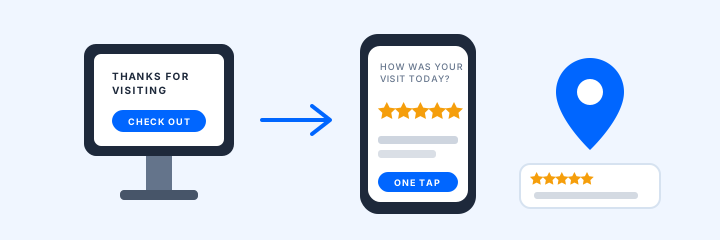
A survey can be offered as part of the checkout experience or completed through a follow-up link, depending on the facility's setup. The important connection is that the feedback relates to a recorded visit. It gives the team context for a conversation instead of leaving a comment disconnected from the experience that prompted it.
One visit can reveal more than one issue
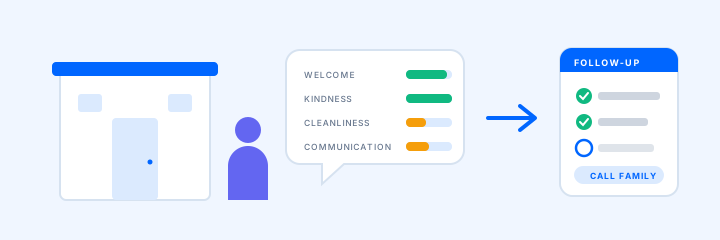
Return to the daughter in the opening example. This is an illustrative scenario, not a customer case study. She gives the staff high marks for kindness but rates cleanliness and communication lower. In her written response, she explains that her father's bathroom needed attention and that she did not know who could answer a question about his daily routine.
Those answers point to different follow-up conversations. A housekeeping supervisor can review the concern about the room. The nursing team can clarify the family's question and explain whom to contact in the future. The positive feedback about the nurse should not disappear simply because another part of the visit was disappointing.
A different visitor might mention an uncomfortable room temperature, a maintenance problem, or difficulty finding assistance. Those observations can help leadership decide whether plant operations, environmental services, nursing, or another department needs to investigate. The software supplies the feedback. People still determine what happened and what response is appropriate.
This is the practical value of family feedback in skilled nursing and senior care. It creates a starting point for questions that may otherwise go unasked. These are visitor-reported observations, not independently verified findings or a measure of clinical outcomes. They deserve attention without being mistaken for the full story.
A low score should lead to a conversation, not just a report
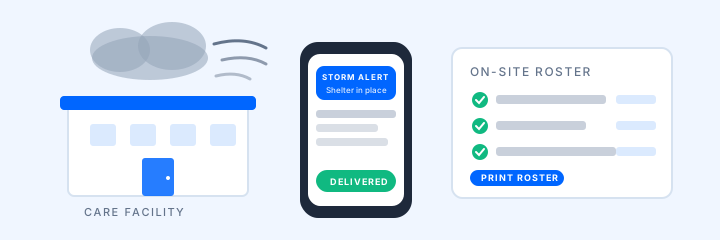
Collecting feedback matters only if someone reviews it. ArrivSure supports configurable notification criteria so a facility can decide which responses need attention. For example, an operator may choose to have scores of three stars or below trigger a review. Designated staff can receive email notifications and, where enabled, text alerts directing them to the response.
That timing matters. A visitor may complete the survey at checkout or later through a follow-up link. The opportunity for a response begins when the feedback is submitted and processed, rather than waiting for a monthly summary. An alert does not mean a concern has been resolved. It means the right person has a reason to look closer.
The next step is to read the answers, review the visit details, and understand the concern before drawing conclusions. Leadership can speak with the appropriate department, contact the visitor through an authorized follow-up process, and use internal notes to record what was discussed and what remains open.
A useful follow-up is specific. "We received your feedback" acknowledges the message. Explaining who is reviewing the concern, what happens next, and when the family can expect another conversation makes the response more meaningful. The goal is not to talk someone out of their experience. It is to understand it and respond appropriately.
Any allegation involving abuse, neglect, or an immediate safety concern needs urgent attention through the facility's established safeguarding, investigation, and reporting procedures, regardless of its star rating. A survey workflow is not a substitute for those responsibilities. Earlier feedback can support timely action, but it cannot guarantee that complaints, inspections, or deficiencies will be avoided.
Google reviews are important, but they are not the whole picture
Public reviews show what people choose to share online. Private visitor surveys create another opportunity to hear from someone who may never write a Google review. A family member might be comfortable explaining a concern directly to the facility, especially when the questions relate to a visit they just completed.
ArrivSure's reputation management tools bring private feedback and connected public-rating information into the same working environment. Leadership can review survey responses while also keeping an eye on the facility's Google rating. These are separate sources of information, and they should remain clearly identified.
An internal visitor-experience score is not the same as a Google rating or a government quality rating. It reflects the responses collected through the facility's surveys. That distinction matters because a strong average does not mean every family is satisfied, just as one poor rating does not explain the entire operation.
For skilled nursing reputation management, the better question is not simply, "How do we improve our stars?" It is, "What are families telling us, and what are we doing with that information?" Private feedback should support honest follow-up, not limit anyone's opportunity to leave a public review. A better reputation should follow a better experience.
Positive feedback deserves just as much attention
It is easy to build a process around low scores and overlook the comments that explain what is going well. Yet a five-star response can be just as useful when it tells leadership why the visit felt different.
A family member may describe a receptionist who remembered their name, a nursing assistant who treated their loved one with patience, or a therapist who made time to explain the day's progress. Another may mention how clean and comfortable the room felt. Those details help leaders recognize the behaviors and routines they want to see repeated.
Positive feedback can also contain an unresolved concern. Someone may give a high overall rating and still write that an item is missing or a question went unanswered. Reviewing the comments alongside the stars helps keep those details from being missed. The score is a useful signal, but the words often tell you what to do next.
Make feedback part of the way you run the building
The most useful survey process is one the team can act on consistently. That might mean reviewing new responses during the morning leadership meeting, assigning a person to follow up on an open concern, and returning to it until the next step is clear. It does not need to become another report that everyone receives and nobody owns.
Over time, leaders can look for recurring themes. Are families repeatedly asking how to reach the care team? Are comments about cleanliness continuing after a concern was addressed? Are visitors noticing the improvements the team has worked to make? These questions help connect feedback with everyday operational decisions.
Context remains important. A handful of responses is not the same as hearing from everyone who visited, and frequent visitors may contribute more than once. Review response volume, individual comments, and the period being discussed before treating a score as a broad conclusion about the community.
ArrivSure's visitor check-in and survey workflows give leadership a way to keep the visit and the experience connected. The responsibility to listen, investigate, and follow through remains with the facility. That combination is what makes the information useful.
Know who visited. Understand what they experienced.
Every visit offers a perspective on the building that leadership may not otherwise hear. Families notice how they are greeted, how employees interact with their loved ones, whether the surroundings feel clean and comfortable, and whether their questions receive an answer.
Knowing who is checked in helps you understand the activity at your front door. Knowing how visitors felt helps you understand what is happening beyond it. Together, those views can give skilled nursing, assisted living, and rehabilitation leaders a more informed starting point for recognizing good work and addressing concerns.
The daughter who left with an unanswered question does not need her experience reduced to a star. She needs someone to hear what she is saying. A connected feedback process gives your team an opportunity to do that.
Request an ArrivSure demo to see how visitor check-in, facility dashboards, and post-visit feedback can work together in your building.
Request a demo