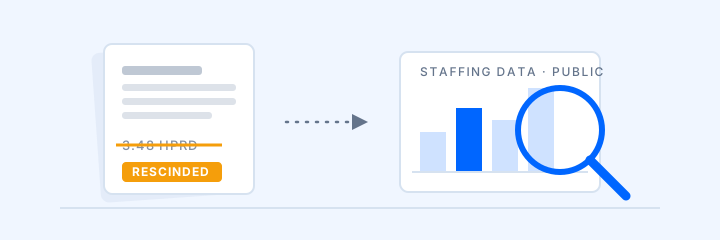
The federal minimum staffing mandate is gone three times over: a federal court vacated it in April 2025, Congress froze it by statute through 2034, and CMS's formal rescission took effect in February 2026. The hours-per-resident-day minimums — 0.55 RN, 2.45 nurse aide, 3.48 total — are off the books, along with the 24/7 registered nurse requirement. Plenty of operators read that as the end of a fight.
If your compliance posture relaxed on that news, it's worth looking closely at what the rule didn't touch. Because the honest summary of 2026 isn't "less oversight." It's "different oversight" — and the new kind runs on data you may not be capturing well.
What was rescinded — and what wasn't
| Rescinded | Still fully in effect |
|---|---|
| Minimum HPRD ratios (0.55 RN / 2.45 aide / 3.48 total) | Enhanced facility assessment requirements |
| 24/7 onsite RN requirement | Quarterly PBJ staffing data submission |
| Medicaid direct-care spending disclosure (state reporting begins by May 2028) | |
| New cost-report disclosure of contract labor cost — plus hours for direct-care roles |
Two of those surviving items deserve particular attention.
The facility assessment is now the main event. Every skilled nursing facility must still maintain a documented, data-driven assessment showing the staffing level and mix required by its actual resident acuity, services, and census. With the numeric minimums gone (staffing reverts to the statutory baseline — an RN eight hours a day, plus "sufficient" staff for your population), surveyors lean on this document harder, not softer — it's the standard your staffing gets measured against, and you wrote it.
Contract labor just became visible. The redesigned Medicare cost report requires facilities to disclose the cost of all contract labor by cost center — and, for direct-care positions like agency nurses and contract therapists, the hours as well. That data flows to CMS, state agencies, researchers, and the public. Combined with quarterly PBJ data, regulators can now see not just how many hours you staffed, but who provided them and what they cost.
Enforcement moved from ratios to receipts
The old model asked: did you hit the number? The new model asks: does the data you report — publicly, quarterly, in auditable form — support the staffing story you tell?
That's a harder question for facilities whose contract-staff records live on paper. Consider what now feeds your public profile:
- PBJ submissions drive the Five-Star staffing rating on Care Compare — and beginning with the FY 2026 program year, the same PBJ data feeds the Total Nurse Staffing measure in the SNF Value-Based Purchasing Program, where it adjusts your Medicare payment
- Cost reports expose your agency-labor spend alongside those hours
- Facility assessments get compared against both during surveys
A contract CNA whose hours are reconstructed from an invoice three weeks after the fact is a weak link in every one of those documents. A discrepancy between what your invoices say and what your PBJ file says is exactly the kind of thing this new transparency regime is designed to surface.
Clean data starts at the front door
The fix isn't more spreadsheet time at quarter end — it's capturing the record at the moment it happens.
Every agency nurse, contract therapist, and rounding physician already enters through your front door. When they check in through ArrivSure, that entry becomes a timestamped staffing record: who they are, what role they worked, when they arrived, when they left.
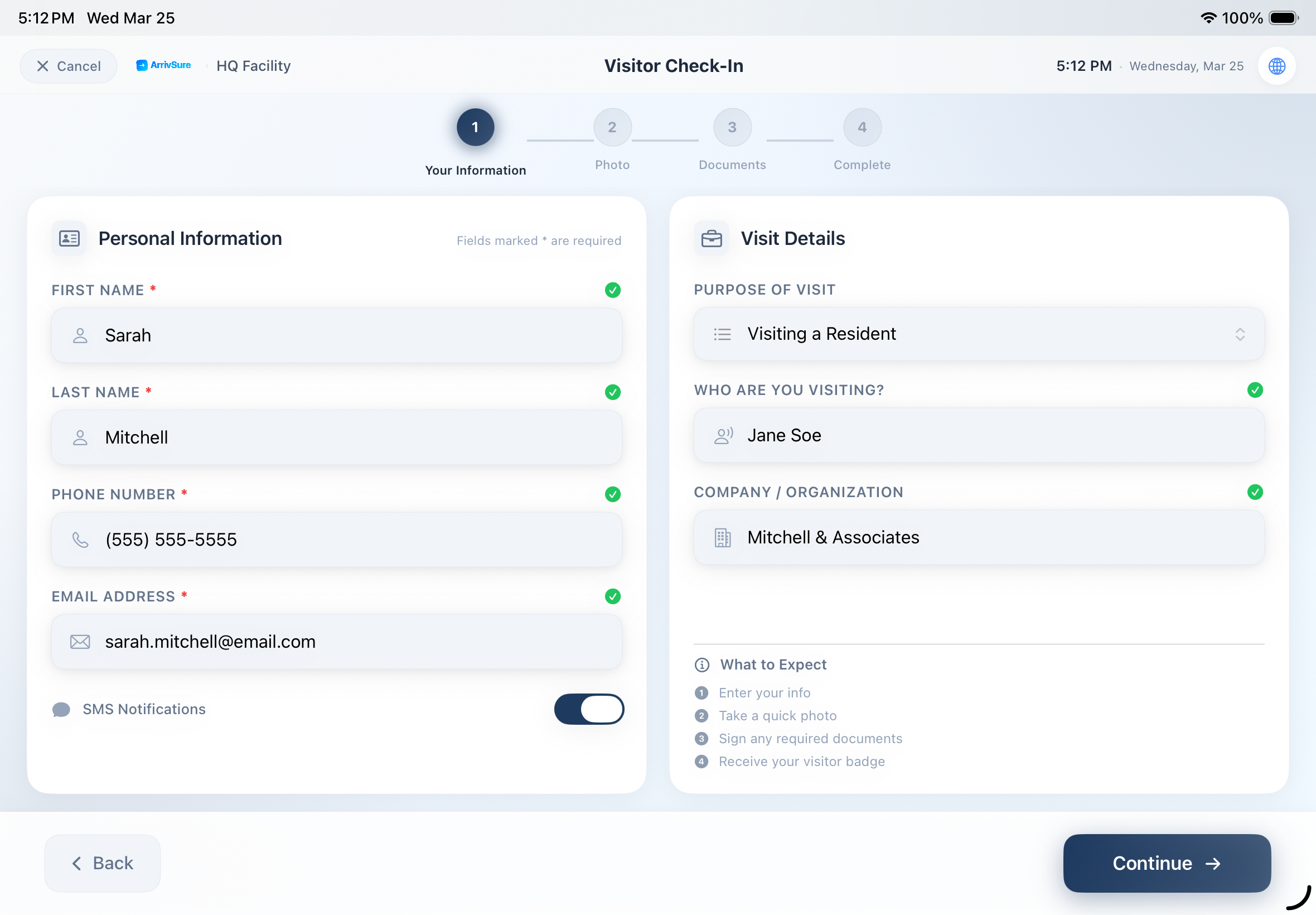 The check-in that creates the badge also creates the staffing record. The healthcare module validates provider identity against the national provider registry (NPI), has providers sign off on their own hours, and produces CMS-ready exports at quarter end.
The result is a staffing narrative where the facility assessment, the PBJ file, and the cost report all agree with each other — because they're all drawing on the same verifiable source.
The mandate is gone. The visibility isn't. The facilities that thrive under the 2026 rules will be the ones whose data holds up when anyone — surveyor, journalist, or shopping family — goes looking.
Want your contract-staff hours to reconcile themselves? Book a demo and see the front-door approach to staffing data.